

.webp "CO2 duct transmitter")
.webp "Multifunctional CO2 duct transmitter")
.webp "Carbon dioxide duct transmitter")
.webp "Sensor for ventilation system")
.webp "CO2 duct sensor with Modbus")
.webp "CO2 sensor for air ducts")

EU declaration conformity
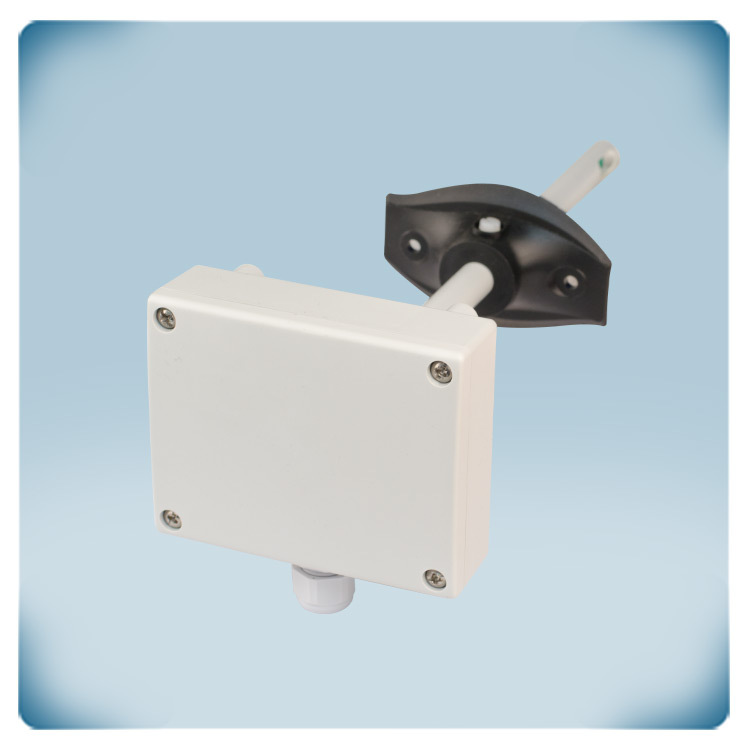
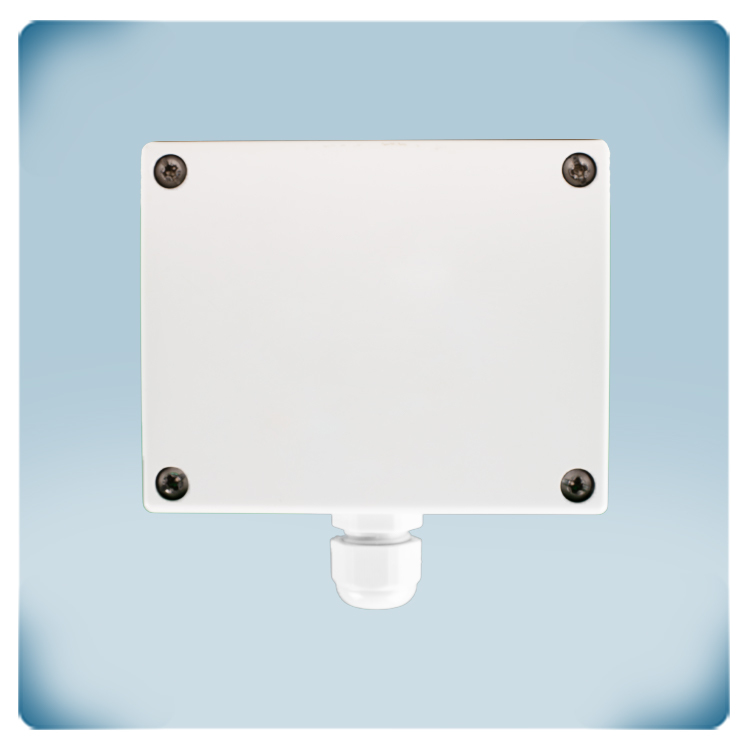
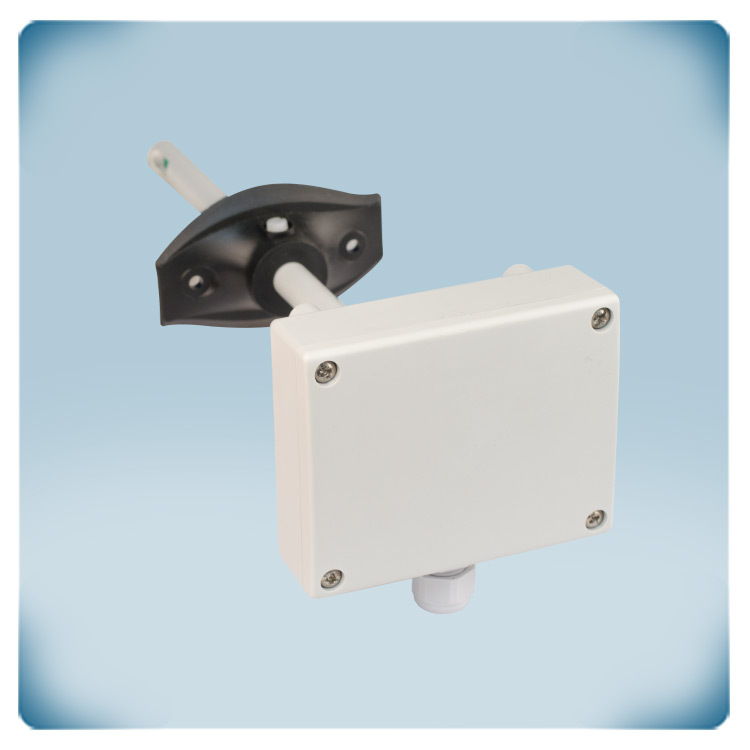
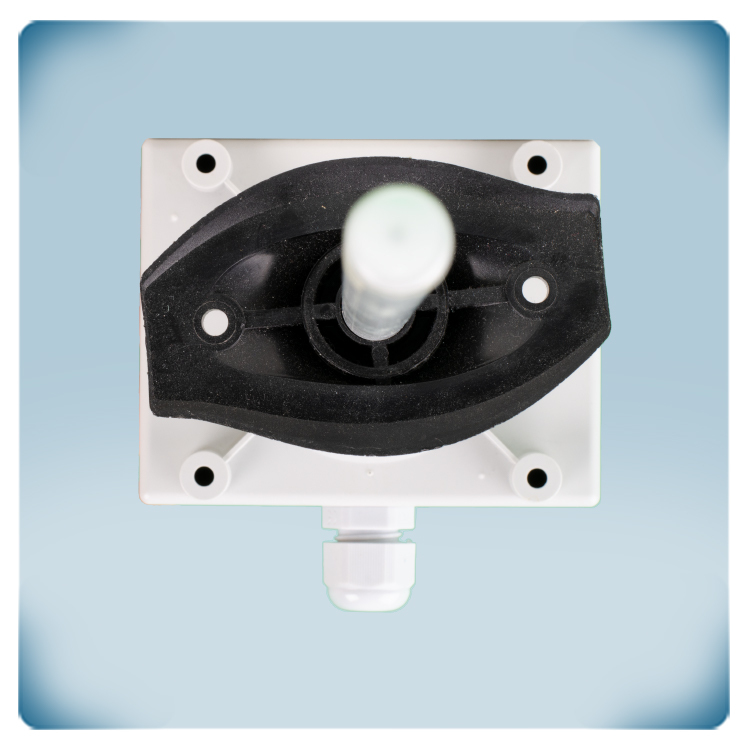
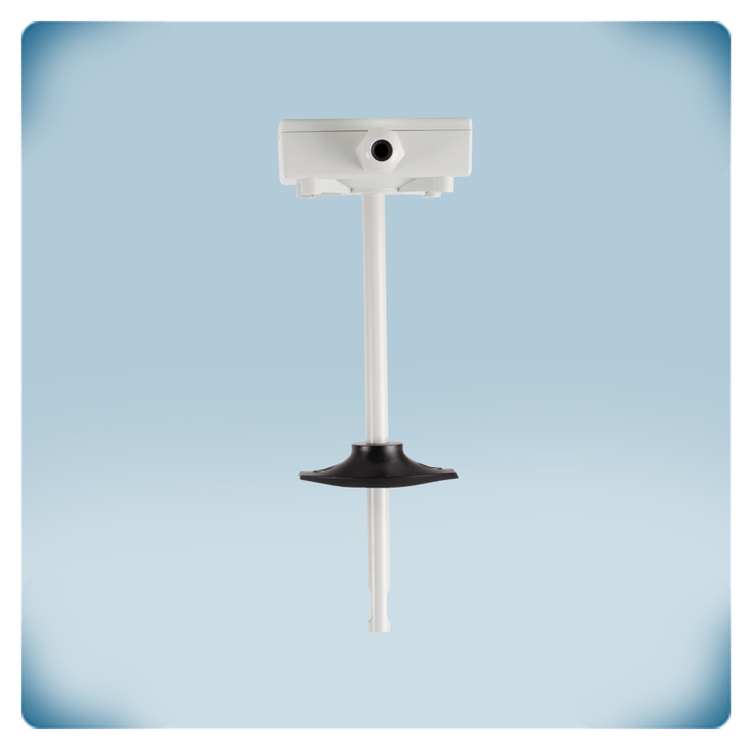
CO2 Sensor | Duct | 24 VAC-VDC
Product description
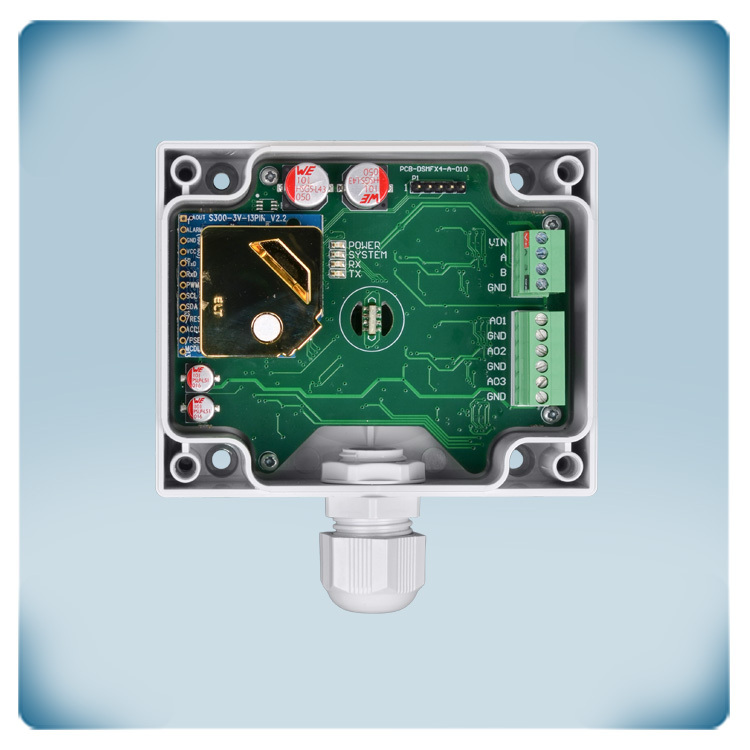
CO2 sensor that also measures temperature and relative humidity in air ducts. All measured values are transmitted via three analogue outputs and via Modbus RTU communication.
The device operates on either 24 VAC or 24 VDC. The standard analogue output type is 0-10 Volt. Different output types can be selected. The analogue output type and all other settings are adjustable via Modbus RTU communication.
The Automatic Baseline Correction (ABC) algorythm compensates sensor drift.


Additional specifications and description
Where to install a duct CO2 sensor?
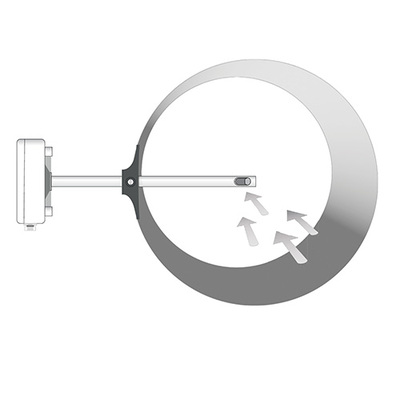
People produce CO2 or carbon dioxide while breathing. That makes CO2 concentration a good indicator for the occupancy and activity level in a space. In many applications, CO2 sensors are used as an indicator for the ventilation requirements. When installed in the ventilation system's extraction duct, this sensor can detect whether the indoor air quality is still adequate. If the CO2 concentration in the extracted air becomes too high, additional ventilation is required. This sensor will function best if it is installed in a straight section of the air duct. Avoid installation in turbulent air zones nearby filters, fans, cooling coils, etc. Position the sensor correctly with respect to the airflow direction. Please consult the mounting instructions for more detailed information.
How to read out the measured value of this CO2 sensor?
NDIR or Non-dispersive Infrared technology is used to measure the CO2 level. This technology has a low life-cycle cost and long-term precision and stability. This sensor has three analogue outputs. Each of them transmits one of the measured values. The default output type is 010 VDC. E.g. by default, output 1 will transmit 0 V at 0 °C and 10 V at 50 °C. When the temperature rises to 25°C, the analogue output will increase in the same proportion to 5 Volts. Each output value varies proportionally in function of the measured temperature, humidity or CO2 concentration. The measured temperature is available via output 1, relative humidity via output 2 and CO2 concentration via output 3. The output type, minimum and maximum values of the range can be adjusted by changing the Modbus RTU holding registers.
How to configure this CO2 sensor?
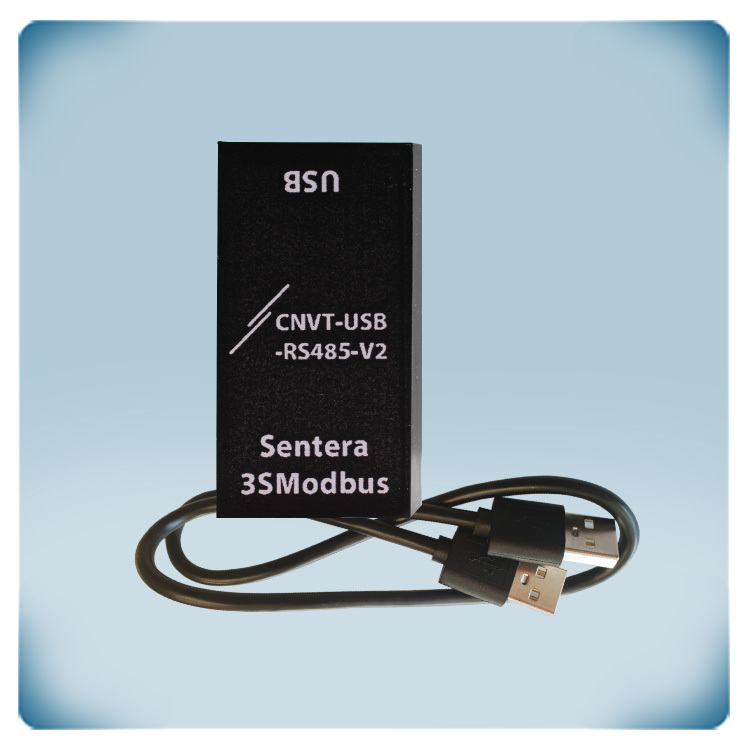
This sensor requires very little configuration. It is almost directly usable once it has been installed. However, if desired, the default settings (e.g., temperature range, alert levels, etc.) can be changed via the corresponding Modbus Holding register. Consult the Modbus register map for a complete overview of all possible settings. To modify the Modbus holding registers, we recommend using SenteraWeb (in combination with a Sentera internet gateway) or the 3SModbus software (in combination with the Modbus to USB converter).
What supply voltage to apply to this CO2 sensor?
This sensor can be supplied with 24 VDC or with 24 VAC. The use of 24 VDC supply voltage increases the safety of the electrical installation because it is usually protected against short circuits and overvoltage. This sensor is intended for 3-wire connection. This means that a cable with 3 wires can be used to connect this sensor. The common ground of the output (GND) is internally connected to the common ground of the supply voltage (V-). Make sure not to connect this common ground to other devices that are powered by an AC voltage.
Do I need to recalibrate this sensor?
No temperature, relative humidity or barometric pressure sensor calibration are needed. For the CO2 referencing, the sensor is equipped with a "self-calibrating" algorithm (Automatic Baseline Correction). This ABC logic algorithm is by default enabled. This algorithm is designed to be used in applications where CO2 concentrations will drop to outside ambient conditions (±400 ppm) at least once (during 15 minutes) in a 7day period, which is typically seen during unoccupied periods. For example, in a school building that is not used at night, the CO2 concentration will drop back to outside air level. The sensor will reach its operational accuracy after 25 hours of continuous operation at a condition that it was exposed to ambient reference levels of air at 400 ppm ± 10 ppm CO2.
What is the sensor's water resistance rating?
The enclosure is optimised for CO2 measurements in air ducts of ventilation systems. It offers an IP54 protection against ingress of dust and moisture. The sensor element is integrated in the probe of the duct sensor. This probe has an opening to have a direct contact between the air flow and the sensor element. The sensor probe itself offers an IP20 protection.
Remarks, reviews & ratings