

.webp "Destratification controller")
.webp "Ceiling fan controller")
.webp "Controller for destratification")
.webp "Summer cooling controller")
.webp "Regulator for ceiling fans")
.webp "Cooling fan controller")

EU declaration conformity
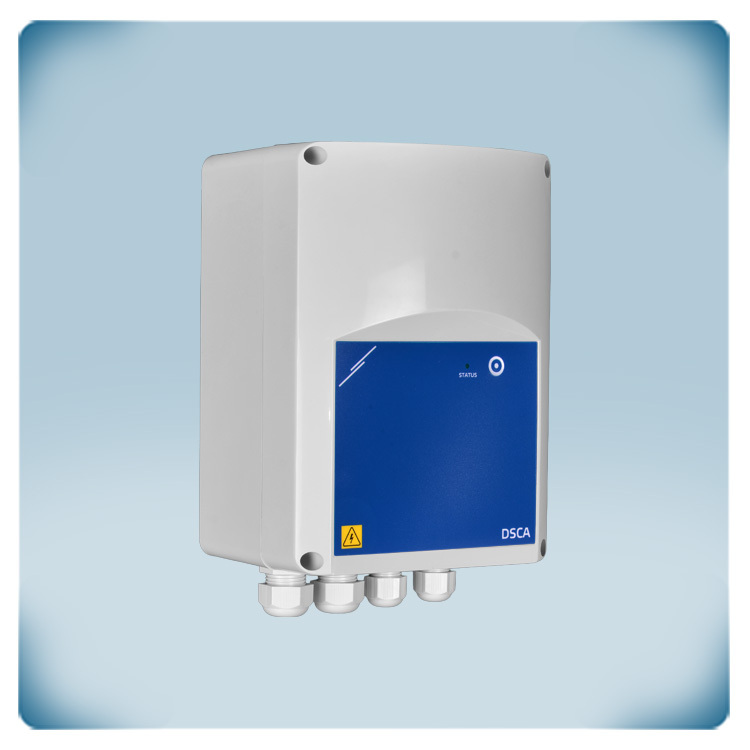
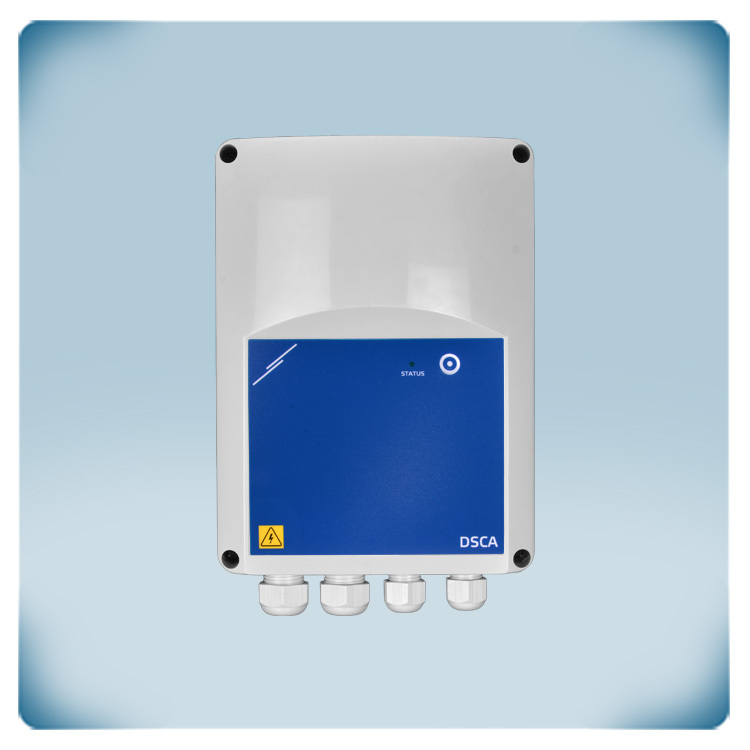
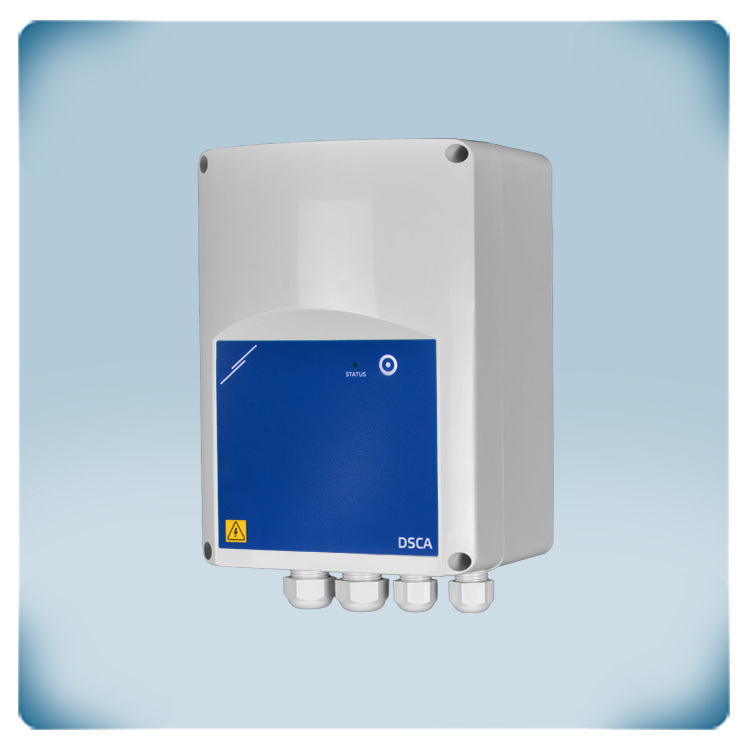
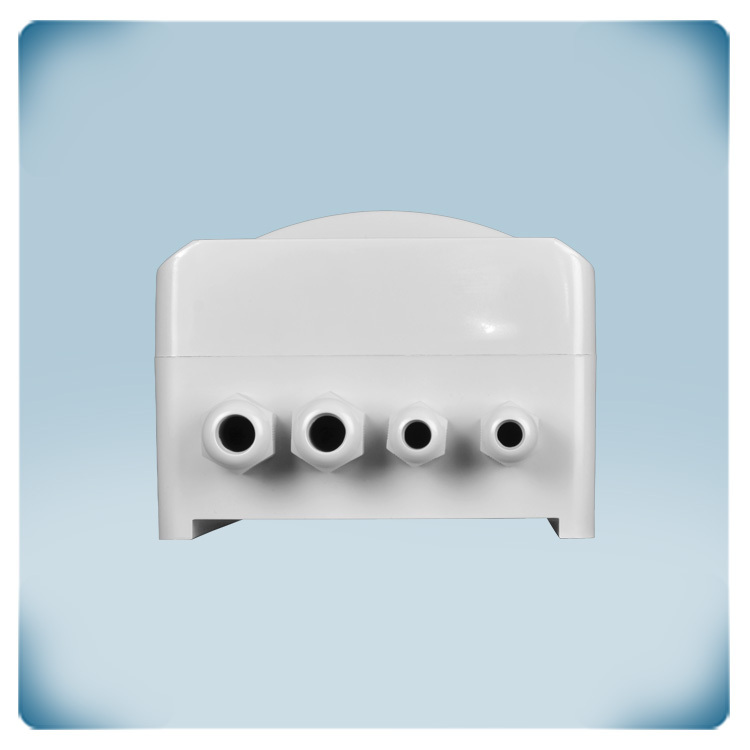
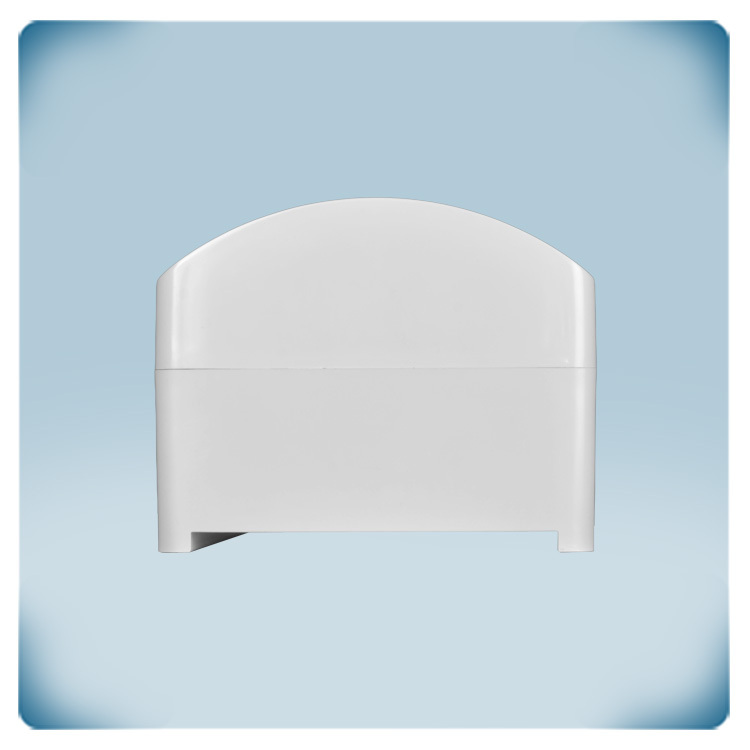
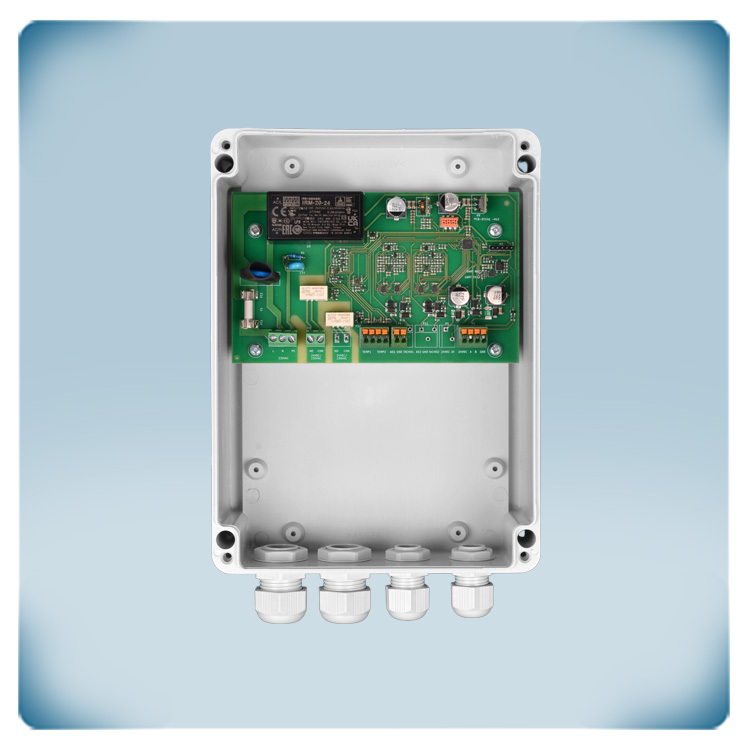
Destratification controller
Product description
Destratification control unit that regulates ceiling fans, redistributing warm air accumulated at the ceiling down to floor level. Destratification realises significant energy savings in colder climates by reducing heat loss through the roof. On hot summer days the ceiling fans can create a cooling breeze.
The temperature difference between the ceiling and the floor is measured using an optional PT500 sensor. Fan speed increases as the temperature difference rises.
The analog output controls various types of EC motors as well as speed controllers for AC fans with an analog input.


Additional specifications and description
What is destratification?
Destratification is the process of mixing a building's internal air to eliminate thermal layers and create a uniform temperature from floor to ceiling. Naturally, air stratifies because warm air is less dense than cold air. Warm air rises to the ceiling, while cold air sinks to the floor. In high-ceiling buildings, this creates a massive temperature gap that wastes energy and compromises comfort. Heat is lost through the roof, requiring extra energy to make the floor temperature comfortable. Destratification reduces these energy losses, while the uniform temperature increases the comfort level.
How does destratification work?
The mixing of the air layers is performed using ceiling fans. These are available with EC motors or AC motors. This controller can directly drive EC motors via the analogue output signal. The default analogue output type is 0-10 Volt. Different analogue input types can be selected via Modbus Holding Register 11.
Ceiling fans with AC motor can also be controlled by combining DSCA8-DM with a fan speed controller with analogue input. The Sentera product range offers following possibilities:
These speed controllers operate using different technologies. The advantages and disadvantages of each are described in detail in this article.
How are the ceiling fans controlled?
This controller features three control states: Delta control, Summer control and Override control.
- Delta control is the default state. In this state, fan speed is regulated based on the temperature difference between ceiling and floor temperature. The warm air is mixed, causing the temperature at floor level to rise and reducing heat losses through the roof. If destratification only is not enough to reach the desired floor temperature, auxiliary heating can be activated via the thermostat function (relay output).
- Summer control state operates the fan at a fixed speed (HR 81) if the floor temperature is higher than the setpoint (HR82). During warm summer days, this state can be used to provide a cooling breeze. This state can also be activated by pressing the button on the front panel.
- Override Control state can be activated via Modbus RTU communication (HR15). In this state, the ceiling fans will be continuously controlled at a fixed speed (HR14), regardless of automatic control logic.
How is the temperature measured?
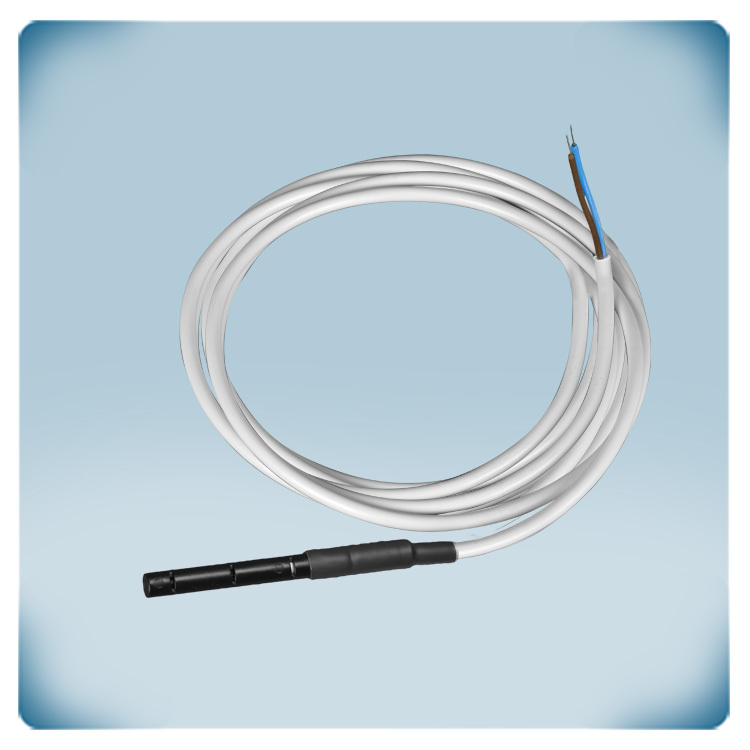
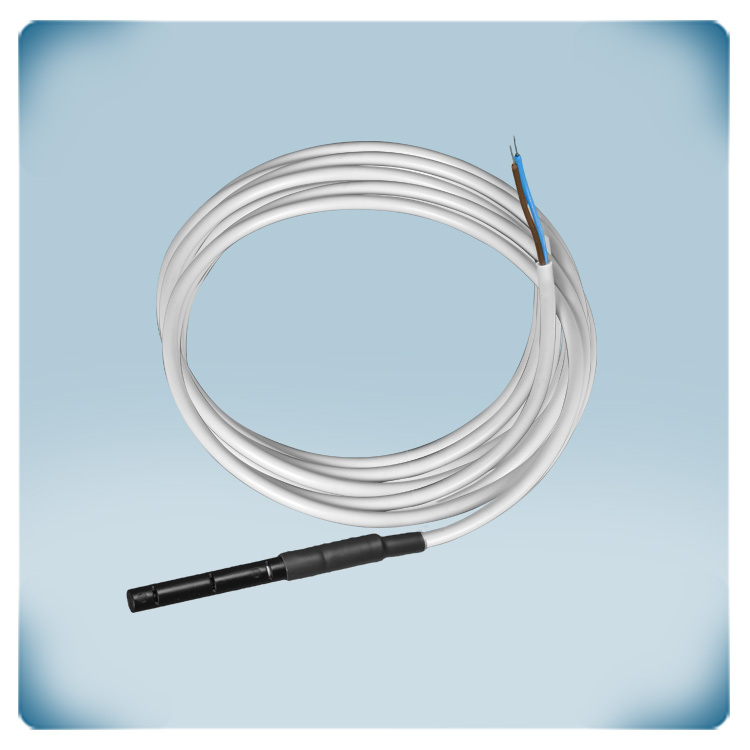
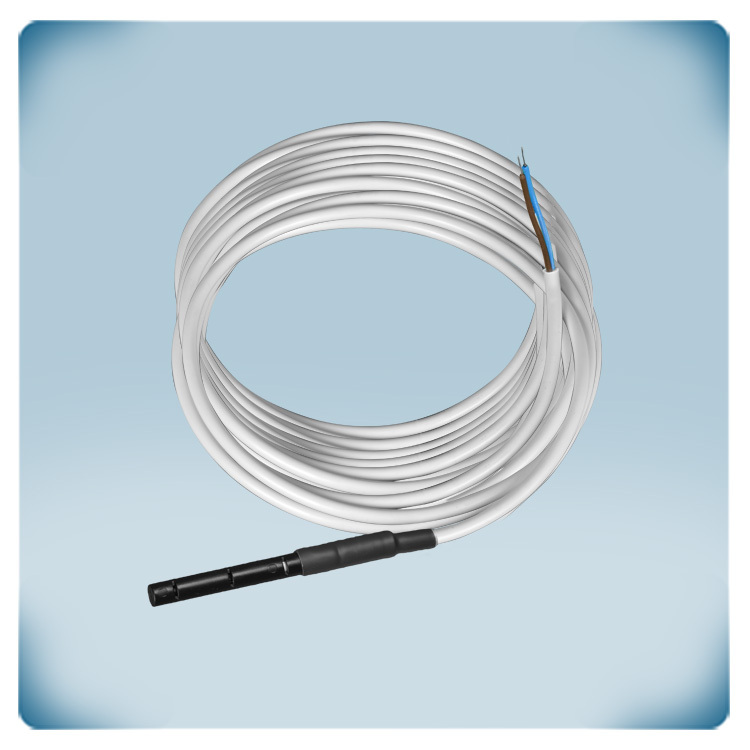
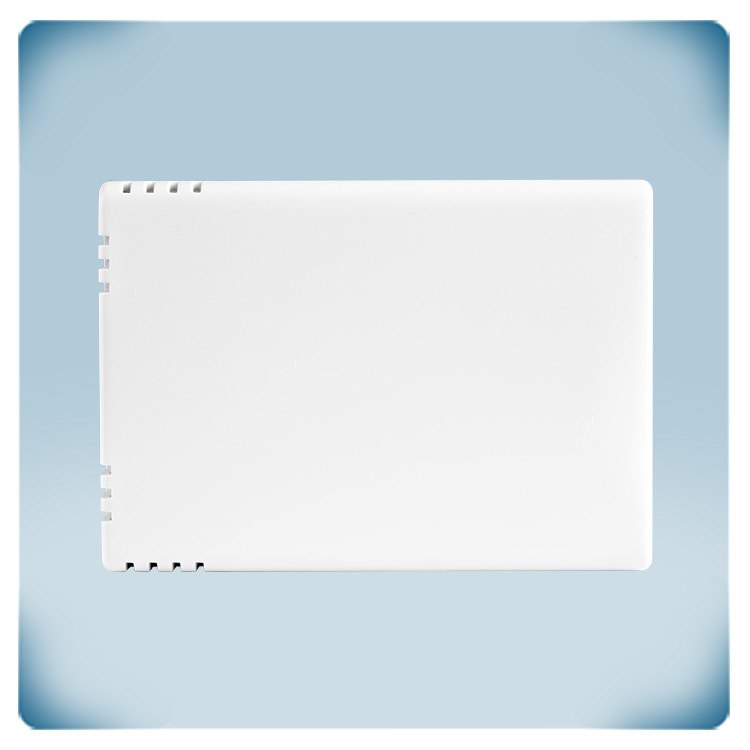
This controller measures the temperature nearby the floor and nearby the ceiling to drive the ceiling fans and optimally regulate the destratification process. Two (optional) PT500 temperature sensors are required for this. PT500 sensors are very reliable and easy to connect via two wires (the polarity doesn't matter). PT500 sensors are available in different enclosure types:
A PT500 sensor is a temperature sensor that measures temperature by tracking how the electrical resistance of its platinum core changes. The name "Pt500" tells you its exact characteristics: "Pt" stands for platinum (the core element), and "500" means the sensor has an electrical resistance of exactly 500 Ohm at 0°C. A PT500 temperature sensor converts the temperature measurement into electrical resistance. Platinum has a positive temperature coefficient. This means that the resistance will increase as the temperature rises. If the cable is extended, this should not cause a significant change in the resistance value. We therefore recommend keeping the cable length as short as possible and limiting the number of connectors to an absolute minimum. Provide separate cable ducts for the temperature sensors to prevent interference and erroneous temperature measurements.
About the enclosure
About the enclosure
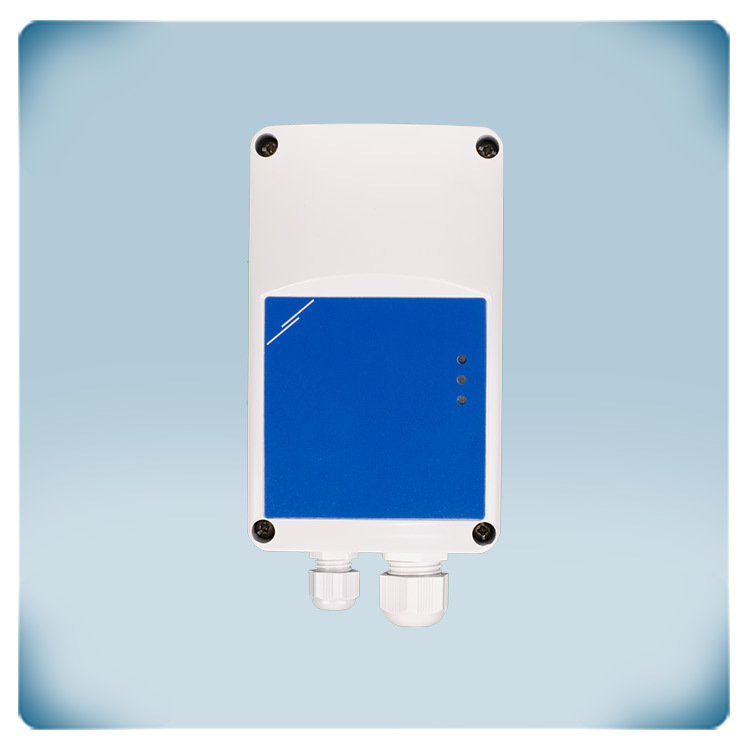
The controller comes in a strong grey plastic case that you simply screw onto a wall. The case has an IP54 protection rating, which means it is protected against dust and splashes of water, and it works reliably in both very cold and very hot places (from -10°C to +60°C).
On the front there is a small light that shows at a glance how the device is doing. On the front there is also a button. Press it on a warm day and the fans start running to create a pleasant cooling breeze. No computer or special settings are needed.
Remarks, reviews & ratings