

.webp "Duct CO2 sensor")
.webp "CO2 sensor air duct")
.webp "CO2 sensor for duct mounting")
.webp "Duct CO2 detector")
.webp "CO2 transmitter air duct")

EU declaration conformity
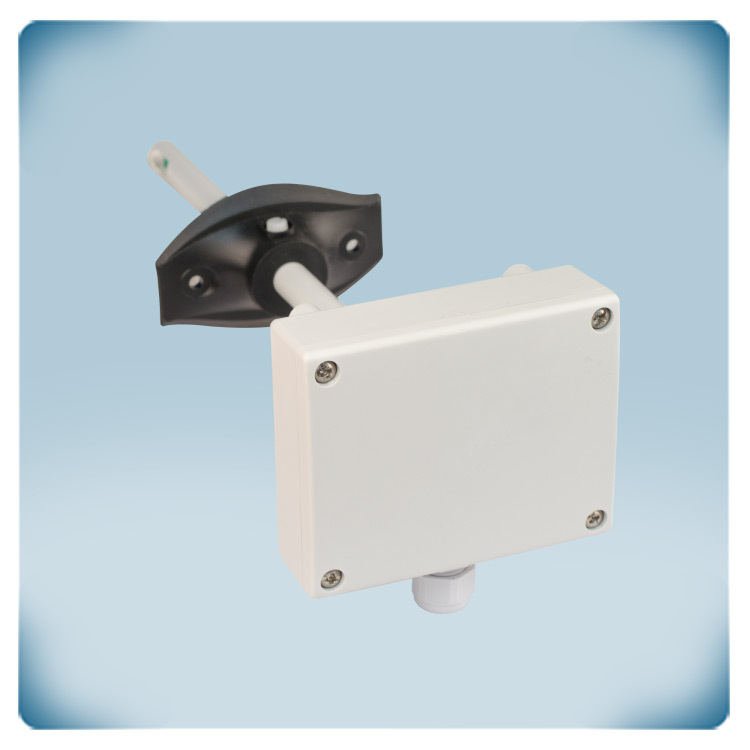
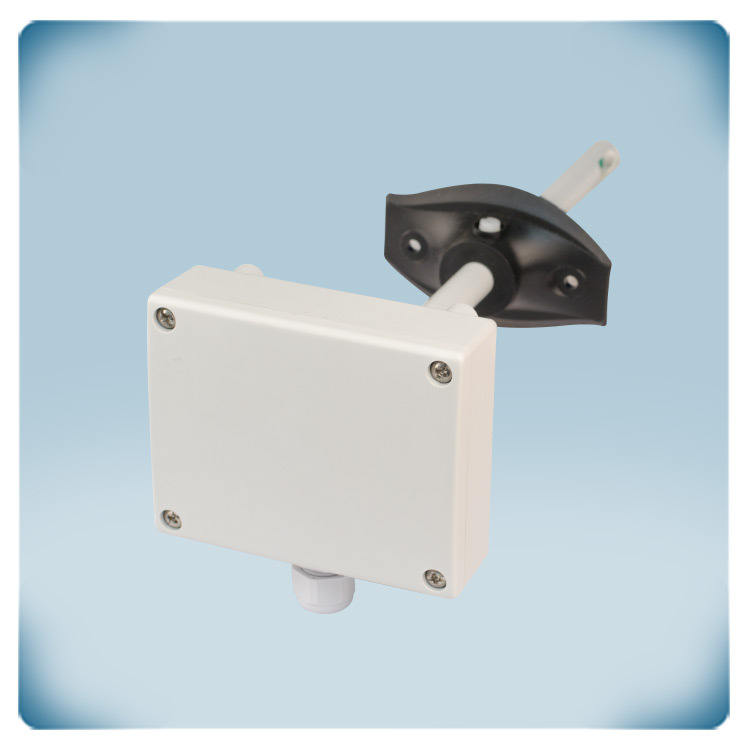
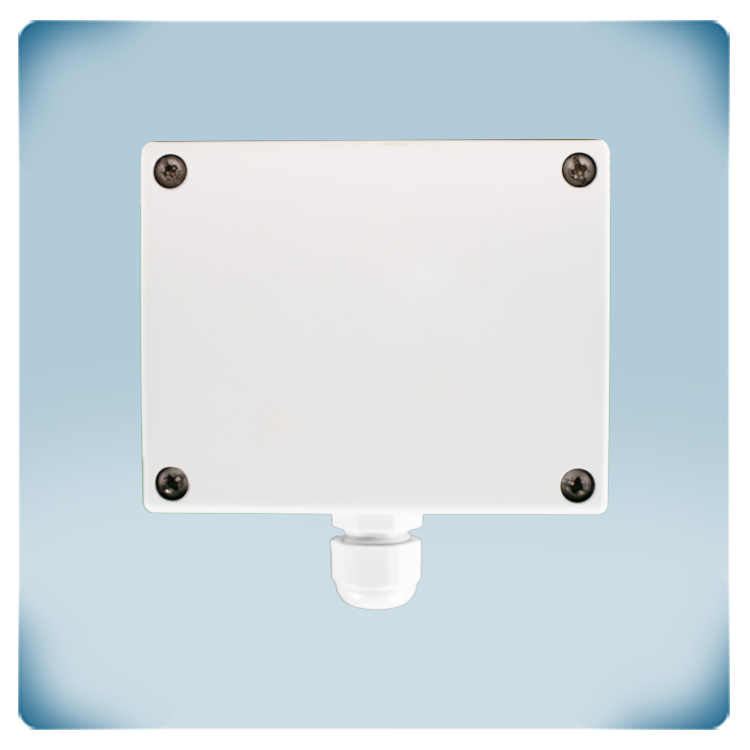
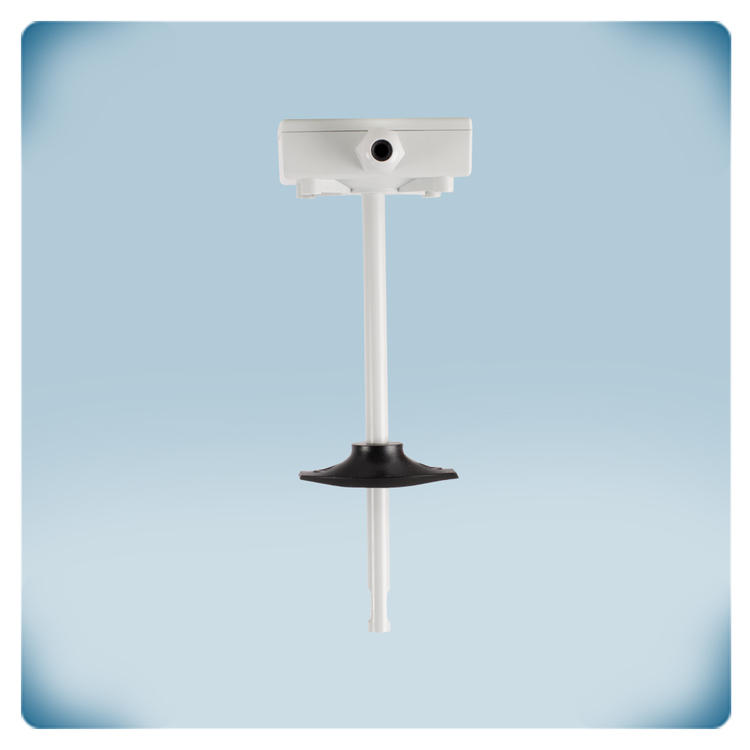
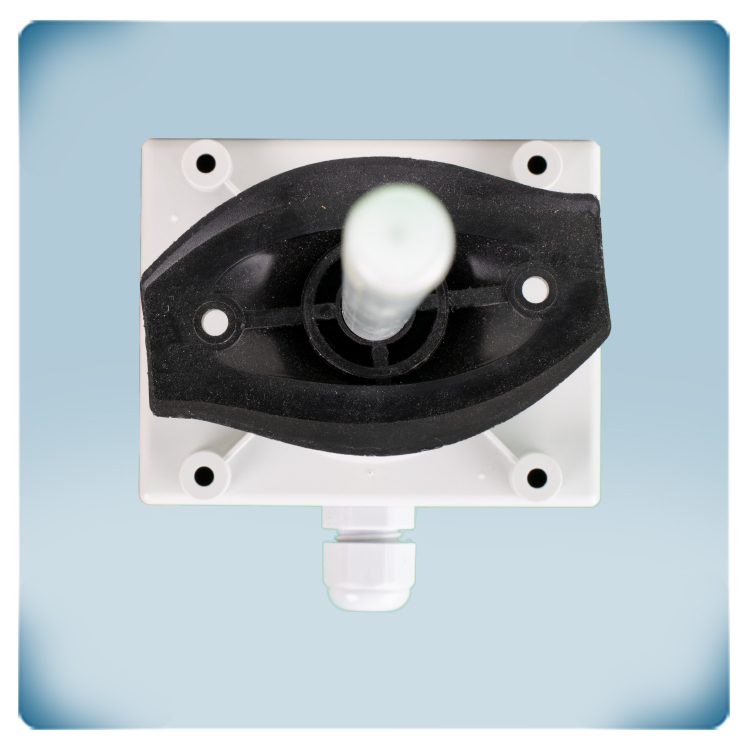
CO2 Sensor | Duct | 24 VAC-VDC
Product description
DSCDG0-4 is a sensor for measuring CO2, temperature, and relative humidity in air ducts. The dew point delta is calculated based on temperature and humidity measurements.
The sensor has no analogue outputs and operates on a 24 VAC or 24 VDC power supply. All measured values and settings are accessible via Modbus RTU communication.
The enclosure is made of premium plastic and provides an IP54 protection. The duct sensor probe has an IP20 protection rating.


Additional specifications and description
Which parameters are measured and why is it important?
This sensor measures CO2, temperature, and relative humidity in air ducts. The dew point delta is calculated based on temperature and humidity measurements.
Carbon dioxide (CO2) is primarily generated by human respiration and is therefore a reliable indicator of room occupancy and activity level in indoor spaces. The higher the CO2 level, the more fresh air supply is required to maintain good indoor air quality. That is why in many applications, CO2 sensors are used as an indicator for the ventilation requirements. The Sentera duct sensors measure CO2 based on the nondispersive infrared (NDIR) sensing technology. The CO2 sensors do not require (re)calibration since the Automatic Baseline Correction (ABC) algorithm is enabled by default.
What are the configuration and customisation options?
This sensor requires little configuration and can be used almost immediately once it has been installed.
This sensor has no analogue or digital outputs, which makes it simpler and more cost efficient. All measured values can be accessed through the Modbus input registers.
How is the sensor installed, and what are the power and connectivity requirements?
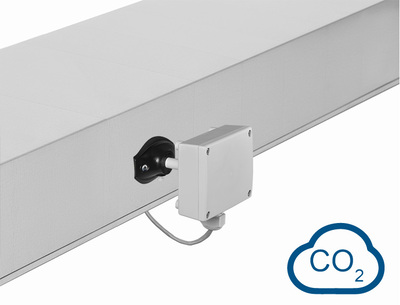
The sensor is designed for installation in rectangular or circular air ducts. The black mounting flange simplifies installation onto circular ducts. For optimal performance, place the sensor in a straight section of the duct. Avoid installing near filters, fans, cooling coils, or other sources of turbulent airflow. Make sure the sensor is positioned correctly according to the airflow direction. For more information, please refer to the mounting instructions.
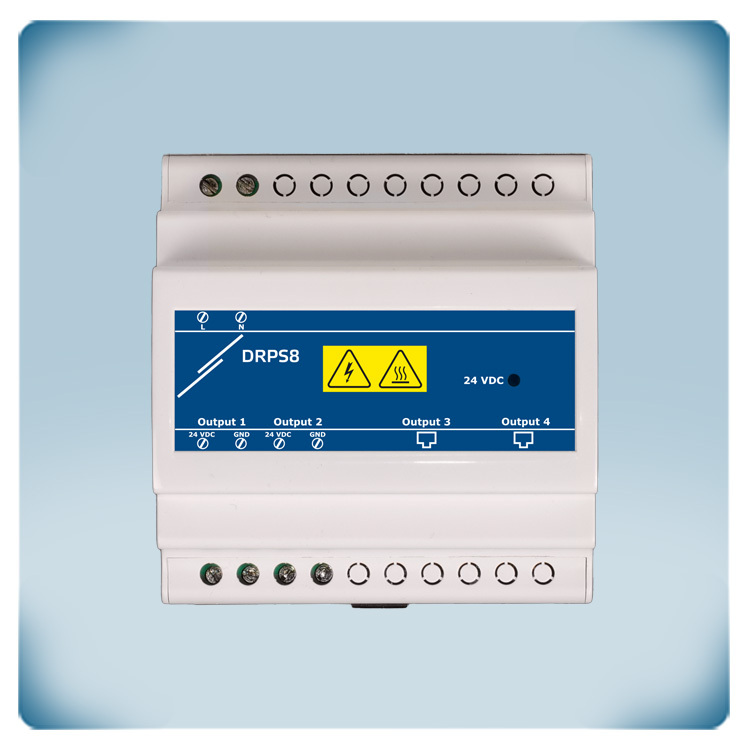
The supply voltage is 24 VAC or 24 VDC. We recommend using a 24 VDC power supply. A 24 VDC supply voltage increases the safety and reliability of your installation, by offering protection against short circuit, overload and overvoltage.
Both the supply voltage and Modbus RTU communication are connected via a pluggable screw terminal block. This pluggable screw terminal block simplifies installation since the cable can be connected at an easily accessible location and then the connector can be plugged into the sensor.
What are the manufacturing quality and protection ratings?
All sensors are designed and manufactured in Europe. Each device is calibrated and tested in our factory. Only high-quality components are used, ensuring long-term stability and accuracy.
The enclosure is produced in-house by Sentera Plastics from premium ABS, providing exceptional strength and durability. The enclosure offers an IP54 protection against ingress of dust and moisture. The sensor element is housed within the duct sensor probe, which has an IP20 protection rating. The probe includes an opening that allows airflow to come into direct contact with the sensor element.
Explore more ways to boost your indoor comfort:


Remarks, reviews & ratings