

Destratification | AC fans | 10 A | IP54
Solution description
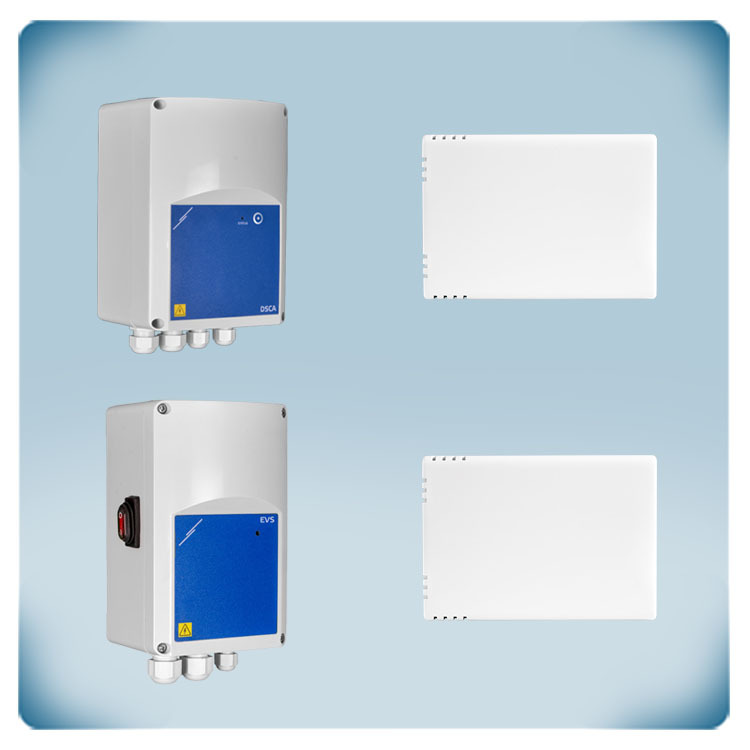
Air mixing is achieved using ceiling fans with AC motors, with a maximum current of 10 A. The destratification controller uses PT500 sensors to measure the temperature at floor and ceiling level. Based on these measurements, it sends a 0–10 V analogue output signal to the AC motor fan speed controller, which adjusts the ceiling fan speed accordingly to optimise air mixing and destratification
Additional specifications and description
What is destratification?
Destratification is the process of mixing the air within a building to reduce temperature differences between the floor and ceiling and create a more uniform indoor climate. Air naturally stratifies because warm air is less dense than cool air. As a result, warm air rises towards the ceiling, while cooler air settles closer to the floor. In buildings with high ceilings, this can create a significant temperature difference between the upper and lower parts of the space. This temperature stratification can lead to unnecessary heat losses through the roof and increased energy consumption, as additional heating is required to maintain a comfortable temperature at floor level.
How does destratification work?
Destratification fans redistribute warm air from the upper parts of the building back towards the occupied zone, reducing temperature differences and improving heating efficiency. As a result, destratification helps reduce energy losses and maintain a more consistent and comfortable indoor temperature from floor to ceiling.
How are AC fans controlled?
The destratification controller sends an analogue control signal to the electronic AC fan speed controller as required, which adjusts the speed of the AC fans accordingly. The fan speed controller is designed to regulate single-phase voltage-controlled motors with a specified maximum current. It regulates motor speed by varying the voltage supplied to the motor.
Remarks, reviews & ratings