

What is free cooling?
Free cooling is a simple and energy-efficient way of cooling buildings by making use of naturally cool outdoor air.
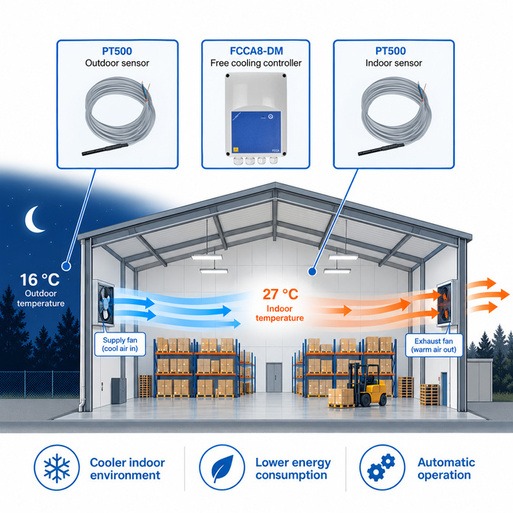
When the temperature of the outdoor air is lower than the indoor temperature of the building, the ventilation system can increase the supply of cool outdoor air to remove excess heat. It can be used as the sole cooling system or combined with other – mechanical – cooling systems, such as air conditioning.
Why is it called “free" cooling?
The air used for cooling is naturally cool and does not need to be mechanically cooled first. When the outdoor air is cooler than the indoor air, it can be used directly to cool the building.
Is free cooling really free?
Not entirely. The outdoor air does not need to be mechanically cooled first. However, the ventilation system still requires energy to move the air. Compared with mechanical cooling, free cooling can therefore significantly reduce energy consumption and cooling costs.
Free cooling controller
A free cooling controller ensures that free cooling is only used when outdoor conditions are favourable. When outdoor air is no longer cool enough, it automatically switches off free cooling and can activate mechanical cooling if needed.
Let’s summarise the benefits of free cooling:
- Lower energy consumption: less reliance on compressors and other energy-intensive cooling equipment.
- Cost-effective: uses naturally available cool outdoor air, making it an economical complement to air conditioning.
- More efficient ventilation: the ventilation system can actively contribute to cooling instead of only supplying fresh air.
- Reduced cooling load: free cooling can reduce the workload of the air conditioning system, particularly during cool summer nights and in spring or autumn.
- Improved comfort: when properly controlled, it helps maintain a comfortable indoor temperature.
Discover Sentera's free cooling controller FCCA8-DM for efficient HVAC management and smarter control.